Episode 6
Why Athletes Struggle After They Retire | Dr. Jarrell Garcia
Why the "life skills" from martial arts don't automatically transfer — and how coaches can build students who thrive off the mat.
Every coach says martial arts builds resilience, focus, leadership, and grit. Dr. Jarrell Garcia's PhD research says something more uncomfortable — those skills don't automatically transfer to real life.
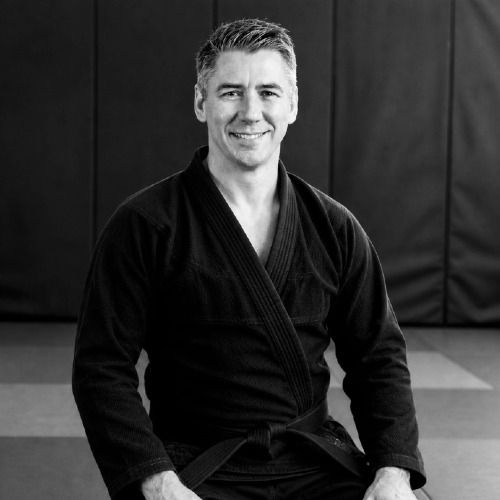
In this episode, Nick Cownie sits down with Dr. Jarrell Garcia — Associate Director of Recreation at the University of Rhode Island, professor at Brown University, TED speaker, 10th Planet BJJ black belt, and consultant to Olympic and Paralympic athletes.
Together they unpack what actually creates transferable skills, why athletes crash after retirement, and how coaches can build students who succeed in every dimension of their life — not just on the mat.
This is one of the most cerebral, useful episodes for anyone who teaches, coaches, or runs a martial arts school.
🔥 IN THIS EPISODE
- Why the number one "jiu-jitsu made me a better business owner" story might be a myth
- The difference between normative and non-normative career transitions
- Why identity foreclosure destroys athletes when their career ends
- How to actually develop transferable skills that transfer
- The 3-step framework: awareness → acknowledgement → practice
- Why coaches should "frame the why" before every hard training session
- The stop-the-jumping-jacks argument that changes how you should warm up
- Why great athletes go bankrupt within 2 years of retiring
- How the structure of a class matters more than the teacher's skill
- State elicitation, anchoring, and alter ego work for combat athletes
- The multiple cups metaphor for balanced identity development
- How the ecological framework is reshaping the way jiu-jitsu is taught
🕒 TIMESTAMPS
00:00 Intro
01:03 Meet Dr. Jarrell Garcia — PhD, black belt, professor
03:00 What athletic identity actually means
05:43 Do life skills automatically transfer off the mat?
10:46 Identity foreclosure and the empty nester athlete
14:09 Normative vs non-normative career transitions
17:18 When athletes should start preparing for life after sport
20:23 The multiple cups metaphor for balanced identity
25:14 Memento mori, stoicism, and the Hagakure connection
29:07 How Jarrell got into jiu-jitsu
33:04 How Jarrell's research shapes his own coaching
35:45 State elicitation and anchoring performance
41:02 Anchoring peak states — lessons from Todd Herman
50:28 The physical anchor Jarrell uses before competition rolls
54:14 Stacking states and identities on demand
57:20 Third-position thinking to solve identity problems
59:07 Treat others how they need to be treated, not how you want
01:01:06 The 4MAT framework for teaching multiple learning styles
01:05:37 Why jumping-jack warmups need to die
01:12:50 How class structure matters more than the teacher
01:16:03 The one person Jarrell would love to roll with
01:17:23 Where to find Dr. Jarrell Garcia
🎯 Most martial arts school owners are one system away from consistent growth. Install the same systems used by real academies around the world:
🤖 Enroll 365™ — https://enroll365.ai
The school that replies first gets the student. Enroll365.ai replies instantly, books the trial in chat, and follows up until the student steps on your mat.
⚙️ Dojo Toolbox CRM™ — https://dojotoolboxcrm.com
The AI-powered operating system for martial arts schools.
🌏 The Dojo Map™ — https://thedojomap.com
Connecting the global martial arts community.
🥋 DOJOCEO™ Mastermind — https://dojoceo.com
Most martial artists open a school. The best operators become DOJOCEOs™.
💬 GET THE TOOLS — COMMENT TO UNLOCK
Find me on Instagram @dojoceo and comment one of the keywords below on any reel to get sent the resource:
👉 Comment STUDENTS — Get a 30-day free trial of Enroll 365™ to stop losing money by automating your trial class bookings.
👉 Comment CEO — Get details on the DOJOCEO™ Mastermind to learn how we turn school owners into millionaires.
👉 Comment MAP — Get your martial arts school listed on the Dojo Map™.
👉 Comment POD — Get the latest DOJO CEO podcast episode sent directly to you.
👇 CONNECT WITH DR. JARRELL GARCIA
Dr. Jarrell Garcia is the Associate Director of Recreation at the University of Rhode Island and a professor at both Brown University and URI, teaching sports leadership, sports psychology, research, and leadership courses. His PhD research focused on athletic identity — how deeply athletes connect with their athletic role, and what that means for their success on and off the field.
A 10th Planet Bethlehem BJJ black belt with 16 years on the mats, TED speaker, and consultant to high school, college, Olympic, and Paralympic athletes, Jarrell has spoken at the Olympic Training Center on athletic transition and identity.
📸 Instagram: https://instagram.com/garciagriponlife
📧 Email: jarrell_garcia@uri.edu
⚔️ ABOUT THE SHOW
Most martial artists open a school. The best operators become DOJOCEOs™.
Hosted by Nick Cownie — founder of Enroll 365™, Dojo Toolbox CRM™, The Dojo Map™, and DOJOCEO™ Mastermind — each episode goes "behind the belt" to break down the business, battles, and breakthroughs behind successful martial arts schools.
👉 FOLLOW NICK
📸 Instagram: https://instagram.com/dojoceo
🌐 Website: https://dojoceo.com
#athleticidentity #bjjmindset #martialartscoaching #bjjbusiness #martialartsschool #brazilianjiujitsu #dojoceo
Transcript
Hello and welcome to the Grappling Map podcast.
Speaker A:It is Nick county here and I'm very excited to be talking to my guest today, Dr. Jerrel Garcia.
Speaker A:I heard about Dr. Jerrel from one of my previous podcast guests, which is one of the things I love about doing the Grappling Map podcast is not only, you know, am I expanding your world, but I'm expanding my world and making awesome new connections in the grappling industry.
Speaker A:And this is going to be a bit of a different podcast episode because Gerald doesn't actually have a business, but he's got a lot going on in other ways that are going to be fantastic for you.
Speaker A:Whether you just train Jiu Jitsu or you're interested or you have a business, it's going to be a fantastic conversation here.
Speaker A:So I'd like to bring up Dr. Jerrell Garcia and if you be happy to just take a minute or two and introduce yourself, tell us who you are, what you do, and then, you know, we'll dive in to the actual podcast.
Speaker B:Awesome.
Speaker B:Thank you.
Speaker B:I still think that was a great intro.
Speaker B:So, yeah, My name is Dr. Jerrell Garcia.
Speaker B:Have a few roles.
Speaker B:So I'm actively the Associate Director of recreation, so oversee all fitness facilities at the University of Rhode island as where I'm also a professor within the College of Education, teaching research and leadership courses.
Speaker B:And then I also teach at Brown University where my focus is more so on sports leadership and sports psychology courses, emphasizing my research background on athletic identity, which I'm sure we'll dive into today.
Speaker B:I'm also Brazilian Jiu Jitsu black belt, so I come through the 10 planet lineage out of 10 planet Bethlehem and been training Jiu Jitsu now for about 16 years.
Speaker B:So when I'm not doing all that, I've also done a TED Talk recently.
Speaker B:I do consulting for former athletes, so athletes who are transitioning from being an active competitor to the life post athletic high level competitor.
Speaker B:So that's everyone from high school athletes, college athletes, and then even a few Olympic and Paralympic athletes as I've spoken at the Olympic Training center here in the States.
Speaker B:So that's just a couple, a few things that I kind of have my hats and my hands in rather.
Speaker B:But yeah, no, I'm really excited to have this conversation and see where it goes and hopefully be able to provide some insights to everyone, something that I'd love.
Speaker A:Let's just kind of dive straight in the deep end, right.
Speaker A:This concept of athletic identity that correct me if I'm wrong, that's what you did your PhD on?
Speaker B:Correct.
Speaker A:Okay.
Speaker A:So for those of us who don't have a PhD, break it down in simple terms for the purple belts.
Speaker A:Okay.
Speaker A:What's that all about?
Speaker A:And how did you end up studying, or did you come up with this.
Speaker A:This concept and, like, you know, frame it a certain way and then decide to go down that track?
Speaker A:How did that evolve?
Speaker A:How did you end up studying athletic identity?
Speaker B:Yeah, so, no, I wish I did come up with that.
Speaker B:I did not come up with it.
Speaker B: that came out back in, like,: Speaker B:And that's all of the athletic identity is, if we define it, is the extent to which an individual connects with their athletic role.
Speaker B:Right.
Speaker B:But then what we saw as we started diving into the studies of athletic identity is the more salient or the more an individual connects with their athletic role, there are certain strengths and weaknesses that naturally come along with it.
Speaker B:So strengths may be the common things that we hear about sport participation, which is heightened level of teamwork and high level of communication and leadership and organization and resilience and grit.
Speaker B:Right.
Speaker B:These are common things that we associate directly with sports that are directly associated with someone that has a high athletic identity.
Speaker B:But through that research, you also find that there's a lot of shortcomings or potential pitfalls that also come with someone that has a high athletic identity, such as higher level of substance abuse, higher level of ignoring emotional health needs, higher level of disassociation.
Speaker B:So depending on where that person is, albeit an active athlete or a former athlete, there's literally certain strengths, but also certain potential pitfalls I have to look out for.
Speaker B:So what really triggered my desire to research that was I grew up playing sports my entire life.
Speaker B:I grew up playing soccer from the time I was four to about the time I went off to college, where I switched over to MMA and then ultimately Brazilian Jiu jitsu.
Speaker B:And I heard the common narrative throughout my whole entire life where sports will help you learn how to be a better leader, be more confident, resilient, so forth and so on.
Speaker B:And for me, as I continued going throughout my life, and particularly when I started really diving into jiu jitsu, I saw people that demonstrated these soft skills or transferable skills on the mat or on the soccer field.
Speaker B:But then you took them out of that space, and they almost didn't demonstrate any of these, or they.
Speaker B:They lacked some of these skills.
Speaker B:Right.
Speaker B:So for me, it became the question of, does sport actually innately rather help you develop these skills?
Speaker B:Or it Just creates the opportunity to develop these skills.
Speaker B:Right.
Speaker B:And that's where I used athletic identity.
Speaker B:Because we would assume if someone has a high athletic identity, the likelihood that they demonstrate these skills, these transferable skills, or life skills as we call them, would be also high outside of sports.
Speaker B:And that's not ultimately what the research found.
Speaker B:And that's where I started really kind of taking it from there and being able to go out there and speak and do conferences and workshops and seminars and consulting.
Speaker A:That's super interesting, this idea.
Speaker A:It's very commonly considered, I suppose, like Australia.
Speaker A:This is where I am, right.
Speaker A:I'm in Canberra.
Speaker A:I'm.
Speaker A:You can't get more Australian than Canberra.
Speaker A:It's the capital city.
Speaker A:Right.
Speaker A:This is our Washington D.C. and so it.
Speaker A:Australia is very.
Speaker A:Australians consider themselves to be a very sporting nation as well.
Speaker A:Sports like, very ingrained in the culture here with football, you know, the, the, the Australian style football without the pads.
Speaker A:Right.
Speaker A:And the, the Aussie rules where they run up each other's backs to grab the ball and swimming is huge here.
Speaker A:And it's very interesting, this concept that people identify with sports, but then the general concept that the skills, the life skills, as you've termed them, are transferable to different areas of life, but that it's not automatically transferred across, that it's kind of context specific, I suppose, in a way, yes.
Speaker A:Even though the general assumption is that, you know, if you're a good team player on the field in football, then you're a good team player in the, you know, in the workplace and it doesn't always transfer across.
Speaker A:It's very interesting, the one that I find from a jiu jitsu perspective, and I ask people on the podcast all the time, how do you feel your jiu jitsu training is.
Speaker A:Improves your business or you as a business person?
Speaker A:And the number one thing, and I'd love to hear your opinion on this, especially as a black belt, you know, and someone who works with, consults with a lot of different people.
Speaker A:The number one response I get is staying calm under pressure.
Speaker A:Right?
Speaker A:And they'll always use an example of if you've got a huge guy crushing you inside control and you can't escape, right.
Speaker A:Then that translates when, when the bills are stacking up or the electricity has been cut off or whatever it happens to be, you can stay calm under pressure.
Speaker A:I've got my own kind of thoughts and opinions on that.
Speaker A:But I'd love to know, you know, do you come across that often that, that assumption, when's it true?
Speaker A:When's it not true.
Speaker A:Give us a bit of PhD wisdom on that topic.
Speaker B:And I love you say that because.
Speaker B:Yes, that's the number one example.
Speaker B:I've even used that example of like, oh yeah, it's.
Speaker B:We're talking about an emergency situation.
Speaker B:Well, what's more of an emergency than someone trying to choke you?
Speaker A:Right.
Speaker B:Um, so as a general idea that makes perfect sense and just to be clear, like can it transfer?
Speaker B:Yes, 100%.
Speaker B:Right?
Speaker B:100% It can transfer.
Speaker B:My biggest thing is that it's not automatic.
Speaker B:Right.
Speaker B:And we see it time and time again where once again the person that's calm and cool on the mats, but then they get into a fight or an altercation off the mats.
Speaker B:It's like that wasn't a demonstration of being calm, cool, collected, having your ego in check.
Speaker B:Right.
Speaker B:So can that be true for some of the people, especially the people who are talking to you or especially people that have business over the time?
Speaker B:100% That could be the case.
Speaker B:But is it automatic for everyone?
Speaker B:No.
Speaker B:Right.
Speaker B:We see and we.
Speaker B:Even if we take it out of jiu jitsu world and we just think about daily life for many people, right.
Speaker B:The number of people that can remain calm, cool and collected at work, but then lose it at their family.
Speaker B:Right.
Speaker B:So even outside the sporting context, because ultimately, at the end of the day, athletic identity is just an aspect of identity psychology.
Speaker B:Right.
Speaker B:So ultimately having to study that as well.
Speaker B:So it's just one of the roles that we play or that we have in our life.
Speaker B:But if we were to look at, and I oftentimes give an example of if I talk about identity foreclosure, right?
Speaker B:The over commitment of your identity to one specific role, to that when you lose that role, you haven't developed much of your other areas of your life, even taken out of the sports context.
Speaker B:I oftentimes talk about, let's say you're a stay at home parent, right?
Speaker B:And you chose to stay at home with your kids all the way up until they leave for college, let's say 18.
Speaker B:Let's even say you have two kids and you stair step them, so they're two years apart.
Speaker B:So in theory you could have 18 to 20 years where you've committed the vast majority of your life to I am a parent, that is who I am, period.
Speaker B:And maybe have not paid attention to your social setting, maybe not paying attention to your own development and pushing yourself professionally because you're focused so much on your kids, which is important.
Speaker B:But then when they leave and you oftentimes hear Something called Empty Nester syndrome.
Speaker B:Right.
Speaker B:Where they're going, I have no idea what to do.
Speaker B:It's because they lost their purpose.
Speaker B:Right.
Speaker B:So athletes experience the same thing.
Speaker B:And the tie there between the two things is just because you are good in one area does not mean it's automatically going to apply in that other area.
Speaker B:We have to be very intentional.
Speaker B:And that's my biggest thing is we have to be intentional with the development of our athletes, but also the intentionality of the using and practicing these skills off of the mat or out of the office or out of these other spaces.
Speaker A:So this idea of, like, identity for closure as well.
Speaker A:Right, The Empty Nester syndrome, and the obvious one with this discussion is the athlete who retires or gets injured and then they can't be.
Speaker A:They can't live from the identity that they've lived from for so many years.
Speaker A:There's so many, so many questions that kind of come up all at once there.
Speaker A:Off, you know, off air.
Speaker B:Off air.
Speaker A:Right before we started, we had a brief chat and I mentioned that my wife, Alex, a long time ago, when she was younger, she was a professional ballerina in France and in Europe.
Speaker A:You know, she lived in Vienna, she was dancing.
Speaker A:She went through the conservatoire in Lyon in France, and she was exceptionally highly trained and doing amazing.
Speaker A:Had all these incredible experiences.
Speaker A:Every.
Speaker A:Every two years in France, one dancer is selected to be filmed performing a solo at a level of.
Speaker A:It's expected to be 100% perfect.
Speaker A:And that's used as the.
Speaker A:That is distributed all throughout France.
Speaker A:You go to the Paris Opera Ballet and it's filmed and then that's distributed and used as the technical reference for every other dancer who must learn that.
Speaker A:That choreography for their exams in order to, you know, know, graduate.
Speaker A:And at the time, she was selected as the dancer to do that.
Speaker A:And that was so.
Speaker A:So she's very, very excellent as a dancer.
Speaker A:Then she came to Australia and injured a knee and couldn't dance anymore.
Speaker A:It was like overnight.
Speaker A:She's like from, you know, top ballerina to basically, not only can she not dance, but it's difficult to walk.
Speaker A:Right?
Speaker B:Yeah.
Speaker A:And that was easily 20 years ago, maybe 22 years ago.
Speaker A:And she's not here right now.
Speaker A:And, you know, nothing that goes on the Internet will ever be heard.
Speaker A:So I can, I can say she still struggles with that now.
Speaker A:That, that transition from that identity and, and having that identity, you know, ripped away in a moment was very, almost traumatic, I would say, as an experience.
Speaker B:Yes.
Speaker A:What let's do.
Speaker A:Let's just love you to kind of riff on that concept for a minute.
Speaker A:And then I've got a couple more specific kind of questions, like, do you see that often?
Speaker A:Is that the kind of thing that comes up all the time?
Speaker A:Yeah.
Speaker A:So just tell me a little bit about, about that from your, you know, how, how you see that showing up in your world.
Speaker B:Yeah.
Speaker B:And I love these conversations because it gives a language for people, right.
Speaker B:Albeit them themselves being the athlete or a loved one or someone they know to be able to understand.
Speaker B:Like, oh, I'm, I, I'm not crazy, right?
Speaker B:Or I'm not being dramatic or they're not being dramatic, right?
Speaker B:That's, that's why I love the work I do.
Speaker B:Because it can feel as if you're the athlete themselves, as no one understands.
Speaker B:People say, oh, I get it.
Speaker B:But you can almost feel like no one understands.
Speaker B:So that's why I love, love doing this work.
Speaker B:But what you described and why there's so much challenge with it is how we end our sport significantly impacts how we transition.
Speaker A:Right?
Speaker B:And so what we're looking at is a normative transition versus a non normative transition.
Speaker B:So a normative transition is to use your wife as the continued example, hey, you know what?
Speaker B:I'm gonna do this.
Speaker B:And then over the course of the next two years, I'm gonna slowly start transitioning out.
Speaker B:Right?
Speaker B:And this is going to be my final show.
Speaker A:Right.
Speaker B:Someone who chooses transition like that sees completely different outcomes overall.
Speaker B:Right.
Speaker B:We're talking about, on average, compared to the person who goes, same thing, hey, I'm going to retire in two years.
Speaker B:And then it gets cut short.
Speaker B:Right, by injury being cut.
Speaker B:If we're talking about other sports being played on the bench, but particularly injury, injury in particular has probably the highest level of issue with transition due to the fact that, once again, it's not planned naturally.
Speaker B:Right?
Speaker B:And I say not not planned naturally.
Speaker B:That includes athletes who have nagging injuries that they ignore but still are used to being able to push through it.
Speaker B:That's part of the culture.
Speaker B:But then when the injury finally gets to a place where they can't overcome.
Speaker B:Right?
Speaker B:So any aspect of that injury that stops their career, that transition to no longer being an athlete, it's way more difficult than any other transition.
Speaker B:Right?
Speaker B:Because as you perfectly kind of hit on, it not only impacts my ability to live out or play out my game, my sports, my art, it also limits my ability of being just a person.
Speaker B:Right?
Speaker B:Being just a person who's able to walk.
Speaker B:So think about it.
Speaker B:You are almost a superhuman in many ways, Right.
Speaker B:I would say even definitely.
Speaker B:Ballerinas are like superhuman in many ways.
Speaker B:So imagine being a superhuman too.
Speaker B:I'm struggling to walk, right.
Speaker B:Or I'm have to relearn how to walk.
Speaker B:That is such a drastic shift.
Speaker A:Right.
Speaker B:So the, the biggest piece I want to emphasize there is one, not only is it normal, right.
Speaker B:But even being able to look at two athletes who end their career at the same time, depending on how they end it, was it normal normative, which once again is iplan it compared to non normative means it was taken away from me.
Speaker B:Right.
Speaker B:Significantly impacts how comfortable that transition will be.
Speaker A:Yeah, that makes so much sense.
Speaker A:So digging into that a little deeper.
Speaker A:So we've talked a little bit about athletic identity and then identity for closure.
Speaker A:And it sounds like with normative and non normative, it's either by design or by circumstance.
Speaker A:By circumstance, right.
Speaker A:And so obviously we want by design if possible, when someone is at the point where actually this is an interesting question.
Speaker A:At what point should an athlete start cultivating on identity, foreclosure to make a normative transition as smooth and easy as possible?
Speaker B:I love that question.
Speaker B:Depending on the coach, they'll hate my answer.
Speaker B:You should always be working on it, right.
Speaker B:Using it in a completely other context and then tying it back to athlete.
Speaker B:It's like if you once again have a business, but you also have a family, but also taking care of your physical, emotional health.
Speaker B:It's like, when should I start caring about my family?
Speaker B:Like, at what point am I financially stable enough that I should start caring about my family?
Speaker B:Right.
Speaker B:People don't ask that question, but we oftentimes do operate that way, particularly like men will tend to operate that way.
Speaker A:Right.
Speaker B:Historically speaking at least.
Speaker B:Or when should I, when is my family set that I don't have to worry about them anymore and I can start really focusing on this thing.
Speaker B:So unfortunately there's not a clear straight answer.
Speaker B:Kind of depends on what are your priorities and what are your goals, but also what support systems you have in place, what's your level of risk aversion.
Speaker B:Right.
Speaker B:Especially as we talk about business.
Speaker B:Right.
Speaker B:Are you, are you willing to live in a one bedroom apartment with you and your spouse for the next two years to really give this that.
Speaker B:All right.
Speaker B:Like there's that kind of level of trade off.
Speaker B:Right.
Speaker B:So what I, what I explain to my athletes is, well, here actually I'll take a step back.
Speaker B:What we hear in the athletic world is if you want to be the best, you have to give it 100%.
Speaker B:And what we confuse and conflate that with means we have to give 100% of our time and 100% of our identity to this sport compared to no.
Speaker B:When you are participating in your sport, you need to be 100% dialed in.
Speaker B:So when I'm at practice, I'm 100% dialed into that practice.
Speaker B:I'm being intentional, not just being there for the sake of being there.
Speaker B:Right.
Speaker B:So being very intentional practice, purposeful practice, if you will.
Speaker B:But then what we conflate that with and confuse that with is great.
Speaker B:When I leave practice, I'm going to isolate myself in my home or isolate my friends who are also doing the same exact activity.
Speaker B:And we're going to continue practicing or study.
Speaker B:Right.
Speaker B:And then I'm going to not give as much to my schooling.
Speaker B:Let's just say school, not give as much as schooling.
Speaker B:Do the bare minimum there so that I can quickly get back to the gym.
Speaker B:Right.
Speaker B:And then if you do that over time and over time and over time, you're just compounding the lack of intentionality and effort you put into these other areas.
Speaker B:Right.
Speaker B:It's like thinking if you had multiple cups sitting on a table and you're just pouring everything into the single cup, knowing that one day, knowing that one day that cup is going to have to be removed off the table and you're going to have to drink from those other cups.
Speaker B:Right.
Speaker B:And then we're going, oh my God, I'm.
Speaker B:I feel like I'm dying because I have nothing to drink.
Speaker B:Right?
Speaker B:It's because we, we haven't poured into those other areas of our life.
Speaker B:You haven't poured into the people their, your relationship.
Speaker B:You haven't poured into your friendship.
Speaker B:You have important to the thought of a business or what that can look like.
Speaker B:Right.
Speaker B:So I like that visualization of we should be pouring into these other areas of our life throughout our career.
Speaker B:But it's okay if it's not at the full extent of our athletic focus.
Speaker B:Right.
Speaker B:That makes perfect sense.
Speaker B:But it can't be nothing.
Speaker A:Yeah, that's absolutely fascinating.
Speaker A:It's.
Speaker A:And I can see why you were saying, you know, some coach is going to hate me for this.
Speaker A:Right?
Speaker A:Because if you're saying you've got this up and coming athlete and maybe they haven't even, you know, they haven't even been drafted yet, right.
Speaker A:They're not out playing professionally.
Speaker A:Right.
Speaker A:We talk about professionals.
Speaker A:The idea of talking to that person about end of career transition and preparing for that now, it's like, well, is, is that a waste of Time.
Speaker A:Right.
Speaker A:I would, I'd agree with you that.
Speaker A:No, it's not, it sounds like there's, it's, it's the, the dichotomy and the balance between focus and, and, you know.
Speaker A:Balance.
Speaker A:Right.
Speaker A:And, and so I love this idea of intentional practice in business.
Speaker A:I talk to my clients about deliberate focus is what I call it, which is pretty much the same thing, right.
Speaker A:In different terms at a very high level.
Speaker A:Obviously I don't have a PhD in this, so I just tell people to focus on the thing at hand.
Speaker A:Because a lot of time, especially in business, people focus on so many different things and they get very, very distracted and never end up progressing on anything.
Speaker A:Whereas if you put, you know, it's like a force multiplier effect, you put all of your focus on one thing while, whilst doing that thing and then have the ability to context switch and leave that alone completely and focus on the next thing.
Speaker A:This is something I, you know, I've got two children, I've got a 12 year old son and a 15 year old daughter and when I'm with them, even if it's for five minutes, I'm with them, I'm present.
Speaker B:Yes, exactly.
Speaker A:And when I'm working, I might have a photo of them on the desk, but I'm, I'm working.
Speaker A:I'm not sitting here right now doing this podcast thinking, I wonder what time my kids are getting out of bed.
Speaker A:Right.
Speaker A:Yeah, it's fine.
Speaker A:So it, there's so many corollaries that are popping into my mind here.
Speaker A:Like, it sounds like this idea of helping, helping athletes build the identity for closure from an early stage is, it seems almost very stoic to me.
Speaker A:I'm not sure how familiar with, you know, kind of modern stoicism you are, but one of the major tenets of stoicism, memento mori, remember you're going to die, right?
Speaker A:So it's like every day, you know, live it as if it's your last and, and remember that this could be the day you die and those kind of things, not to be depressive or down, but to allow that to, to have you focus on living the day as fully as possible.
Speaker A:And then from a more martial arts point of view, there's a book that I absolutely love called the Hagakuri.
Speaker A:I'm not sure how into, you know, the Japanese samurai style, you know, roots of jiu jitsu, as I mentioned, you know, I'm, I'm a Japanese jiu jitsu black belt, I'm purple belt in bjj.
Speaker A:BJJ comes from judo, which comes from Jiu jitsu.
Speaker A:And so in, in my style of jiu jitsu we do Jiu jitsu is, you know, it's, it, it's often considered the, the unarmed art of the samurai.
Speaker A:Right.
Speaker A:And it's absolute rubbish.
Speaker A:So if a samurai was unarmed, there was a big problem.
Speaker A:Right.
Speaker A:They'd sleep, they'd sleep with their, with their short sword.
Speaker A:Right.
Speaker A:It's like these guys were never unarmed.
Speaker A:So Jiu jitsu is actually an armed and unarmed martial art.
Speaker A:And after.
Speaker A:There are quite a few surviving samurai written texts and one of the Most.
Speaker A:This is 17 volumes long and it's been condensed into a little couple of hundred page book.
Speaker A:So most of it we can't access in English.
Speaker A:The book's called the Hagakuri.
Speaker A:The translation of that is beautiful name.
Speaker A:It's in the Shadow of Falling Leaves.
Speaker A:Right.
Speaker A:That's the, the title of the book.
Speaker A:And the book starts with an amazing passage that says the way of the samurai is found in death.
Speaker A:Right.
Speaker A:When it comes to either or, there's only the quick choice of death.
Speaker A:Okay.
Speaker A:And so this is talking about, you know, not hesitating, being prepared to give your life up at a moment for the, for your retainer, for your lord and all those kind of things.
Speaker A:But also tied into it because it's very influenced with Buddhist philosophy, Zen Buddhism, you know, over the years, it kind of directly connects to that memento mori concept from stoicism of remember that you, you could die today.
Speaker A:That samurai went a step further and they're like, you know, prepare yourself because you're probably going to die today.
Speaker B:Yeah.
Speaker A:And the idea of, you know, preparing every day as if you're going to die is, is the ult.
Speaker A:Like, where are you going with this, Nick?
Speaker A:Tie it together, right?
Speaker A:It's the ultimate identity for closure, right?
Speaker B:Yes.
Speaker A:And it helps everyday life so much more because you don't take things for granted and you're actually prepared for, for anything less than death.
Speaker A:Right.
Speaker A:A knee injury tying this back into my wife, if she was prepared to die that day, Theoretically the knee injury is so much less than dying.
Speaker A:Yeah.
Speaker A:Yes.
Speaker A:So do you see in the rest of your work, do you see much of this kind of stoic or all those kind of extreme end philosophies?
Speaker A:Does that kind of creep into your work at all?
Speaker B:Not, not really.
Speaker B:And that all made like actually perfect sense.
Speaker B:I was able to follow it perfectly.
Speaker B:Right.
Speaker B:Because our goal is to avoid our identity foreclosing on.
Speaker B:That's our goal.
Speaker B:We don't want our only identity to foreclose on, right.
Speaker B:We hopefully want to have been investing in all these areas of our life, right.
Speaker B:But yeah, this kind of this either or mentality that oftentimes lives innately in sports is either you are either giving this 100% or you are not, period.
Speaker B:Right.
Speaker B:That's how many people look at this for.
Speaker B:Especially if we're talking about combat sports.
Speaker A:Right?
Speaker B:Because the margin of errors, the, the margin of errors are so much higher in the sense of the consequence, right.
Speaker B:If you make the smallest error, it can have a huge consequence when it comes to martial arts or even jutsu for that matter.
Speaker B:In the sense of that could be a broken limb or a completely knee replacement, right.
Speaker B:Depending on what submission is being applied.
Speaker B:So the idea of hey, you're e giving this 100% or it's not going to fly.
Speaker B:Right?
Speaker B:It's not as actually common in Jiu jitsu within the reason, even though it still bleeds into it a bit much just because the vast majority of competitors are having to balance other jobs in order to be able to compete, we're slowly starting to see that change.
Speaker B:But with my other athletes, very much so, particularly like my college athletes that I've worked with it is that right?
Speaker B:To.
Speaker B:To the extent of either even we're gonna.
Speaker B:What major do you want?
Speaker B:And let's say you go, hey, I'm really thinking about being an engineering major.
Speaker B:I may go.
Speaker B:You know, I really want you to be successful here.
Speaker B:And the rigor of that schedule doesn't look like it would benefit your ability to give this sport your best.
Speaker B:And I really want to look out for you.
Speaker B:So why don't you think about doing like communications either way, at the end of the day, it's your choice, but I'm really just trying to look out for you to where I'm literally kind of pushing someone to change their potential dreams that they've had since they were a child of wanting to be an engineer.
Speaker B:Because I see talent in them and I'm going, hey, this is going to distract them from me, from them giving their sport 100%.
Speaker B:That's like a real thing that happens in universities.
Speaker B:At the States.
Speaker B:In the States rather.
Speaker B:So yeah.
Speaker B:So that's something more.
Speaker B:So I see with my college athletes and even my Olympic athletes.
Speaker B:But, but the college athletes I've worked with Olympic athletes.
Speaker B:I can't not give my sport 100% because the margin of error is so slim or that it's just not built into it.
Speaker B:I can't.
Speaker B:If I If I do that, I'm going to fall behind.
Speaker B:But as we kind of touched on before, if you're intentional with your practice and have good coaching systems, realistically you should and can still pour into these other areas of your life.
Speaker B:Right.
Speaker B:But that's more so where those conversations end up kind of lying and us being able to go, okay, what does it really look like?
Speaker B:Let's break down your week, or let's break down a day.
Speaker B:Let's break down a week and see where there's moments where you are not using the time you have to commit to these other areas.
Speaker A:Yeah, that's.
Speaker A:It's so interesting.
Speaker A:How did you get into Jiu Jitsu originally?
Speaker B:Funny enough, watched ufc.
Speaker B:And two, there was two pinnacle moments.
Speaker B:One was watching a UFC event, and it was Andre Loski versus Tim Sylvia.
Speaker B:Might have been the second time they fought.
Speaker B:And I never forget watching and Andrea Larski dropped him with maybe like overhand right through a couple strikes, and then fell back on a leg lock and finished him.
Speaker B:And I was like, what just happened?
Speaker B:I don't.
Speaker B:I don't understand.
Speaker B:He grabbed his leg and now he's screaming, right?
Speaker B:And I was like, oh, that's Jiu Jitsu.
Speaker B:Cool, right?
Speaker B:So that was one moment for me that was like, oh, this thing that they're calling Jiu Jitsu is.
Speaker B:Seems, like, powerful because this Tim Sylvia guy is a giant.
Speaker B:And then the second moment was my older brother, who at the time was in the military army.
Speaker B:He's really retired now, and he does a lot of the combative training for the army.
Speaker B:And he came home and him and I wrestled like any siblings do.
Speaker B:And he took my back and he had a rear naked choke.
Speaker B:And he's like, tap, or I'm going to put you to sleep.
Speaker B:I was like, that's just in movies.
Speaker B:So he proceeded to put me to sleep.
Speaker B:So after that, I was like, oh, my God, this is magic.
Speaker B:This is so cool.
Speaker B:So he showed me a couple moves.
Speaker B:I went back to college and found a local MMA gym because I went to a super small school in a small area in the middle of Pennsylvania.
Speaker B:So we fortunately had MMA gym.
Speaker B:So I started training MMA and then about a year and a half later, switched over to strictly doing Jiu Jitsu and have been doing it ever since.
Speaker A:How long ago was that?
Speaker B: That was in: Speaker B: Wow,: Speaker B:Yeah.
Speaker A:And at what point did you know, you know, this.
Speaker A:This is it for me.
Speaker A:I'm addicted now.
Speaker A:I'm a Jiu Jitsu guy.
Speaker A:I lost everyone as I walked down the street.
Speaker A:And.
Speaker B:So, as I mentioned, I played sports.
Speaker B:My hometown.
Speaker B:I played soccer, being my primary sport.
Speaker B:And so I was looking for an athletic outlet.
Speaker B:And funny enough, I never really cared about competing that much.
Speaker B:I really loved the training and coaching aspect of sports.
Speaker B:I love.
Speaker B:I love coaching more than even competing.
Speaker B:So, yeah, so after high school, playing soccer, I was like, okay, I'll try this Jiu Jitsu thing.
Speaker B:That once again, I got triggered in the interest.
Speaker B:And for me, it was like, oh, this is a new thing I can learn.
Speaker B:And out.
Speaker B:Like, I saw it as like chess in many ways.
Speaker B:Even though I wasn't playing chess at the time, I now love chess.
Speaker B:But it's like, wow, this is a competitive thing.
Speaker B:It's a physical thing.
Speaker B:It builds community.
Speaker B:It's also making me physically competent.
Speaker B:Right.
Speaker B:So I found value in that, as I think we should not only be emotionally competent, we should be physically competent as well.
Speaker B:Right.
Speaker B:I think it was Plato who said, the man who's only.
Speaker B:What is it?
Speaker B:The person who's only a scholar is too weak.
Speaker B:The person who's only a warrior is too brute, Brutish.
Speaker B:Right.
Speaker B:The goal is to be a scholar athlete.
Speaker A:Absolutely.
Speaker B:And a warrior.
Speaker B:Right.
Speaker B:So, yes, I fell in love with it in that sense.
Speaker B:And then I just.
Speaker B:I just kept going.
Speaker B:Like, I didn't have, like, a single thing where it's like, yes, this is my thing.
Speaker B:For me, it was just like, this is fun.
Speaker B:This is another sport.
Speaker B:And, ooh, there's so much I could learn about this and then being able to apply that knowledge.
Speaker B:So, yeah.
Speaker A:How has your professional work and your research impacted either your approach to your own Jiu Jitsu or, you know, how you.
Speaker A:How you teach and coach?
Speaker B:Like, if I were to take clips from all my students, my biggest thing that I preach is, cool.
Speaker B:If I make you better at Jiu Jitsu.
Speaker B:Cool.
Speaker B:You're going to be doing jujitsu at max.
Speaker B:The average person, what is training twice a week, three times a week at the most, for an hour and a half, two hours.
Speaker B:So six hours out of the day, you're going to be intentional, focused, humble, confident, resilience, and demonstrating grit.
Speaker B:Awesome.
Speaker B:I want you to take these things off the map.
Speaker B:So for me, that's probably been the biggest influence of not only my research, but just who I am as a person and who I am as a leader in my professional work of.
Speaker B:I want you to not only be effective in this specific thing that we're working on together.
Speaker B:I want you to be able to take aspects of it, aspects of it, and directly apply it when you leave here.
Speaker B:Because you're going to be off the mat significantly more time than you are going to be on the mat.
Speaker A:Right.
Speaker B:You're going to be off the field, you're going to be off the court, you're going to be out of the water, you'll be off the track for significantly more time than you're on it.
Speaker B:And even if it's not right now, during this part of your life, at a certain part of your life, you will be.
Speaker B:And I want to make sure that you, that I've connected some of the dots for you so that when you are ready for that transition, you're going, oh, yeah, Coach Garcia literally said, hey, you know how we're being patient here?
Speaker B:You actually have to listen.
Speaker B:Make sure you're doing that in your next argument that you're having with someone.
Speaker B:Actually listen.
Speaker B:Seek first to understand, then be understood.
Speaker B:Right.
Speaker B:Understand the components of this technique so that you know how to take it apart.
Speaker A:Right.
Speaker B:Just like when you're in an argument, understand, truly understand the argument that the person is trying to make fully and genuinely so that you can agree with the parts that you can agree with and also disagree with the parts that you don't agree with.
Speaker B:Right.
Speaker B:So that's probably been.
Speaker B:If you were to ask that same question to my athletes, they'd probably say that definitely is.
Speaker B:He's always preaching.
Speaker B:But then also, obviously I trained them well.
Speaker B:Yeah.
Speaker B:And being intentional.
Speaker B:Intentionality, right.
Speaker B:Intentional with our practice because we only have so much time together, but also intentional with every other aspect of our life.
Speaker B:As you perfectly mentioned, when you're with your kids, if it's two minutes or two hours, it's like I'm going to give them as much of that time undivided as I possibly can.
Speaker B:Especially if, you know, you only have limited time.
Speaker B:Right.
Speaker B:If we don't have limited time, then we can be more flexible.
Speaker B:But if you go, hey, I only got 15 minutes before they have to go to bed because I just worked from 7:30 until 7:00pm it's like, hey, the phone's away, it's downstairs.
Speaker B:While I'm fully giving them that time.
Speaker A:This is something I've been very interested in for a long time.
Speaker A:The idea of the context switching.
Speaker A:Okay, so we've touched on how the, you know, the athletic identity can be context specific.
Speaker A:And even though the general opinion might be the life skills learned in sport or jiu jitsu directly translate across into everyday life, but you found that's not necessarily the Case, Right?
Speaker B:Yes.
Speaker A:However, you're instructing your Jiu Jitsu students, you know, you train two to six hours a week, and you show grit and determination and focus.
Speaker A:And how do we get that into the everyday life?
Speaker A:Do you have specific approaches or practices or recommendations for people to take those life skills from the sport and transfer them across to a different context?
Speaker A:Yeah.
Speaker B:So I'll answer this from two sides, one from the coaching side.
Speaker B:So I have, like, things I've, like, shared with coaches, but, like, here's technically how you even implement this, because oftentimes when.
Speaker B:And I'll just use the.
Speaker B:When I was at the Olympic Training center talking to Paralympic athletes as well as coaches, they see this potentially as a distraction, right?
Speaker B:This idea of, hey, I know you're getting ready for the Olympics, but you should really talk about xyz.
Speaker B:They're like, I don't have the time.
Speaker B:Right?
Speaker B:So for me, there are certain things where it's like, no, you're already actually doing much of this, and all I'm asking for you is to actually emphasize it a little bit.
Speaker B:Right?
Speaker B:So there's something called, like, framing, right?
Speaker B:So coaches go into, let's say, a training session knowing, you know, today I'm going to push them.
Speaker B:I'm gonna try to break them today.
Speaker B:I kind of want.
Speaker B:We get two or three people throw up.
Speaker B:I've succeeded.
Speaker A:Right.
Speaker B:Almost every coach has gone into a training session.
Speaker B:Like, I'm gonna see who I can break today.
Speaker B:Right?
Speaker A:Cool.
Speaker B:Love that.
Speaker B:Keep doing that.
Speaker B:I'm all for that.
Speaker B:Add in, right?
Speaker B:A why we're doing that.
Speaker B:Right.
Speaker B:Unless you don't know why, and then I question your ability as a coach.
Speaker B:Right?
Speaker B:But frame why you're doing that?
Speaker B:Like, hey, even if it's a message prior to class, like, hey, we're getting after it tonight.
Speaker B:We got people getting ready for competition.
Speaker B:As we know, in competition, you can't.
Speaker B:You can't give 50%.
Speaker B:Every single scramble has to go 100%.
Speaker B:We have to win every single scramble.
Speaker B:Tonight, we're gonna.
Speaker B:I'm gonna try to make y' all lose these scrambles.
Speaker B:I'm gonna try to break us.
Speaker B:Because our competitors who are out there competing, that's.
Speaker B:That's their goal, right?
Speaker B:So even just something as simple as framing the context, put them in the mindset of, like, oh, like, yeah, we're pushing it, and we're going to be in it tonight, but there's a reason there's a method behind this.
Speaker B:Right?
Speaker B:And then you can even do it as a recap at the end, right?
Speaker B:Yeah.
Speaker B:Y' all push through it.
Speaker B:Tonight.
Speaker B:I saw a couple you break, but then you're able to finish through, right?
Speaker B:That's what we need to do.
Speaker B:Because at times in life.
Speaker B:And there you go.
Speaker B:That's when the little coach spiel happens, right?
Speaker B:You can add the little anecdote from your personal life or tie it to some of your athletes of, hey, when you're struggling at work and da, da, da happens, right?
Speaker B:You're able to draw that connection for them.
Speaker B:So that's all I typically ask my coaches, like, oh, here's some small things that you're literally already doing.
Speaker B:You're already doing it now.
Speaker B:Just frame them for the athletes of what they can do is.
Speaker B:Most of the time, one of the biggest challenges when it comes to transfer is just awareness.
Speaker B:One is awareness that I even developed a skill, right?
Speaker B:So often if you were to ask, and you can even try, like, ask people like, hey, what skills are you learning in jiu jitsu?
Speaker B:They'll rattle them off, right?
Speaker B:But they're kind of generic, right?
Speaker B:If you were to kind of dig deeper and go, okay, how did you exactly learn resilience?
Speaker B:Or how did you exactly learn purpose or intentionality, right?
Speaker B:And they'll either get an answer, which is awesome, or they'll kind of fumble around an answer and it's going, cool.
Speaker B:Well, let's.
Speaker B:Let's see if we can find an answer for that.
Speaker B:So first is you even being aware that you've developed a skill, now that you're aware that you've developed a skill, is seeing and valuing the fact that it is transferable, right?
Speaker B:It's a surprising number of athletes that I have worked with, and I haven't worked with a crazy number, but it's a surprising number of them that when we talk about them feeling valuable off of the field or off the mat, they don't feel valuable because they don't think those skills transfer over.
Speaker B:They're like, well, that was different.
Speaker B:That was, you know, it's because we're a team and they have to, like, they almost discount those skills.
Speaker B:Skills, right?
Speaker B:And I think people would be surprised about that.
Speaker B:So, one, it's awareness.
Speaker B:Two is making them acknowledge that those skills can even be transferred.
Speaker B:And then third, which we're all as martial artists, as business people, as what have you, is practice it, right?
Speaker B:So for me, if I'm coaching them or consulting them, I'm going great.
Speaker B:Over the course of this next week, I know you're going to have a disagreement with someone, or I Know you're going to have a feeling that you're going to convey.
Speaker B:I want you to do it because this can help you with this aspect of the life skill that we want you to develop.
Speaker B:Right.
Speaker B:So one is awareness.
Speaker B:Two is the understanding and realization that it can transfer.
Speaker B:Three is practicing, intentionally practicing that skill off the mat, off the field in a regular life situation that literally everyone will have pop up at some point in their daily life or week.
Speaker A:Yeah, that's super helpful.
Speaker A:And it ties into something that I don't do so much of this anymore, but I used to a lot.
Speaker A:One of the businesses you still technically have this and I, you know, every once a year or so I might, I might actually deliver this.
Speaker A:But for probably 15 years I taught hypnosis and neuro linguistic programming.
Speaker A:I've got a very specific approach to teaching those because I think both of those fields suffer from personal development fluff where people put in all kinds of strange concepts in order to, you know, pad it out and improve their sales, conversions to their next level program and stuff like that.
Speaker A:And, and I'm quite a, an extreme pragmatist.
Speaker A:So I, when, when I learned these things, I tested everything that I was taught and trimmed the fat off everything that didn't work.
Speaker A:Now the NLP techniques were all kind of 25 to 45 minutes long.
Speaker A:You get someone to close their eyes and guide them through stuff.
Speaker A:And I found that if you understand behind the actual process what's the framework or the structure of what's being done here, There might only be three steps, right?
Speaker A:Three parts to the framework, but it's being delivered in 27 individual steps in a scripted process.
Speaker A:All you need to know is these three, this three part framework, then you can cut it down from 27 steps to maybe five, right?
Speaker A:Yeah.
Speaker A:And all of a sudden you've saved a whole bunch of time.
Speaker A:So I found that I could get all of these techniques down to between five and 10 minutes.
Speaker A:So I averaged it at seven.
Speaker A:And I wrote a book called Seven Minute Mindset and it was massive smash hit all over the world.
Speaker A:It's really cool.
Speaker A:I traveled and did a lot of speaking and teaching and seminars and stuff like that.
Speaker A:At some point my, my clients started asking me, how is it that you built this business?
Speaker A:And I would just answer their questions.
Speaker A:Eventually I realized I could probably charge money for that.
Speaker A:And that's how I got into business coaching and consulting.
Speaker A:It was always very heavily linked with the mindset work.
Speaker A:And one of the things that I found most useful to teach to business Owners was the concept of.
Speaker A:It's the same thing that you're describing here, but in, you know, in NLP terminology, it's referred to as state elicitation.
Speaker A:All right?
Speaker A:So whenever we're performing an action, whether it's on the sports field or we're typing an email or cooking dinner or playing with our kids, in that individual context, the action we're doing, the behavior is inextricably linked to the emotional state that we're experiencing at the time and the thoughts that are going through our mind.
Speaker A:And so where, you know, and the actual physical actions might be 5% of what is producing the end result behind that.
Speaker A:We have the thoughts and the, and the emotional state.
Speaker A:What NLP focused on, which I found very interesting, was how can we elicit that emotional state on demand and then through a hypnotic process called anchoring, lock that in so that you essentially have a button you can press on yourself as a trigger to bring that state back.
Speaker A:So we'll call it state the combination of emotions, thoughts and behavior or action.
Speaker A:So you can re engage that same state at a very high level practically instantly.
Speaker A:And it's very, very interesting.
Speaker A:This is one of the things that, you know, when we talk about the athletic identity is context specific and the skills don't necessarily automatically transfer across.
Speaker A:It's brought all of this up for me because this is one of the ways that in business I would have people transfer those things across.
Speaker A:They might be very, very confident.
Speaker A:I might have a client who is very confident as a coach, one on one, and then they get a speaking opportunity where they're going to speak to a thousand people and they are scared, you know, out of their mind.
Speaker A:So we access the state of confidence that they experience when coaching and make that very, very powerful.
Speaker A:Lock it in with some kind of trigger.
Speaker A:You know, it could be anything.
Speaker A:Clicking your fingers, rubbing your hands, whatever it happens to be, be.
Speaker A:And then give them the ability to recall and re enter that state as they're walking out on stage.
Speaker A:Right.
Speaker A:And so I can see a lot of crossover.
Speaker A:Do you have any experience or any background with those kind of tools and techniques as well?
Speaker B:No, but you're hired.
Speaker B:You're hired.
Speaker B:You now have to join me for some of my calls.
Speaker B:But that's essentially what that.
Speaker B:So now just, you know, I like looked over, like took note of that.
Speaker B:Because.
Speaker A:Because.
Speaker B:Yeah, because that's a part of.
Speaker B: ic identity was found in like: Speaker A:Right.
Speaker B:And I'm still going to say that's not that Long ago.
Speaker B:I don't care what anyone says, that wasn't that long ago.
Speaker B:So the, the sports world in many ways is still very remote.
Speaker B:So pushes back against much of sports psychology in many ways, right?
Speaker B:Even some people going like, it's not a thing, it's like unnecessary.
Speaker B:But yet we still see all the challenges that the most highest level athletes experience, right?
Speaker B:From what the bankruptcy rate of NFL players, right.
Speaker B:Is like bankruptcy within the two, two and a half years.
Speaker A:Right.
Speaker B:And it's like, how is that humanly possible?
Speaker A:Wow.
Speaker A:Right.
Speaker B:Or I think there was just a very well known NFL player here that said struggled living off of $100 million a year.
Speaker B:Right?
Speaker A:Yeah.
Speaker B:Because, oh my God, like, and it's easy to.
Speaker B:Once again, that is crazy.
Speaker B:I will say that that's crazy.
Speaker B:I understand.
Speaker B:To just be like, oh my God.
Speaker B:Well, that person is just this, it's just like, well, let's, let's, let's break this down.
Speaker B:Yes, that's a crazy statement.
Speaker B:But let's, let's break this down to what's missing here.
Speaker B:Because there's many things that's missing here, right?
Speaker B:Is it the lack of boundaries?
Speaker B:Okay, let's talk about how does someone establish boundaries, right?
Speaker B:So much of like, exactly what you just said of going, great.
Speaker B:You're, you have these things here.
Speaker B:How do we get them to show in this other location, in this other environment, in this other context, right?
Speaker B:So that's why I like the idea of, once again, you'd be surprised at how many people don't even realize they're developing it, right?
Speaker B:Or the person you were talking to is like, well, that's just talking one on one.
Speaker B:It's like it's the same thing and they see it as just drastically different, right?
Speaker B:It's like at the end of the day, it is just you talking, right?
Speaker B:About a subject matter that you know and you're confident and you're passionate about.
Speaker B:And they're like, yeah, but it's different.
Speaker B:You're like, yeah, right?
Speaker B:And then getting to see like, no, it can be transferred over here.
Speaker B:We just need a tool, right?
Speaker B:And not a physical tool, but we just need a tool or something that's going to help you bridge.
Speaker B:That's what we're talking about is just the bridging.
Speaker B:And as soon as they're able to bridge it, it just opens up literally a whole new world for them, albeit from professional opportunities or just a whole new world of peace.
Speaker B:I'll be at peace with that part of their life being closed.
Speaker B:It has fulfilled that chapter that it was meant to fill in this book that we're writing that we call life.
Speaker B:Right.
Speaker B:Which then allows them to then move forward without the weight that they continue to hold or carry.
Speaker A:Yeah.
Speaker A:Something that you just said really jumped out to me, which is you give them the tools and not necessarily the physical tools.
Speaker A:Right, Correct.
Speaker A:Coming back to what I was talking about before, there's a great book written by Todd Herman called the Alter Ego Effect.
Speaker A:And I don't know if you're familiar with Tod or with his book.
Speaker A:He's a high performance coach.
Speaker A:He's worked with.
Speaker A:Also worked with a lot of athletes.
Speaker A:Right.
Speaker A:And one of the things that he does now, he.
Speaker A:He has.
Speaker A:I'm almost certain he has the same background skill set as I do, but he doesn't talk about it directly.
Speaker A:There would be hypnosis, nlp, and these kind of psychologically manipulative tools.
Speaker A:I suppose you could.
Speaker A:You could say that allow people to take control of their mind and their emotions.
Speaker A:So he wrote an entire book on this.
Speaker A:And the concept is exactly what I described, where you access a certain state, or in his, you know, version, a specific alter ego.
Speaker A:And he talks about, you know, Beyonce has Sasha Fierce.
Speaker A:Right.
Speaker A:Even, you know, even Superman.
Speaker A:And Clark Kent is a big example that he uses.
Speaker A:And that one's kind of in reverse.
Speaker A:Right.
Speaker A:Because Superman takes off the glasses to become.
Speaker A:Yes.
Speaker A:Clark Kent takes off the glasses to become Superman.
Speaker A:Right.
Speaker A:But the concept still holds.
Speaker A:And Todd actually has people choose and then use a physical object like glasses.
Speaker A:And he himself wears.
Speaker A:He doesn't need glasses, but he wears glasses without lenses in them.
Speaker A:When he's on stage or presenting to access that other.
Speaker A:That other ego, he refers to it as an artifact.
Speaker A:Right.
Speaker A:You've got to brand things and give them a name.
Speaker A:So that's a physical artifact.
Speaker A:There's just a tool.
Speaker A:In my.
Speaker A:My terminology, that would simply be a tool that allows you to trigger the access of that state.
Speaker A:Okay.
Speaker A:And it's very, very, very interesting.
Speaker B:Yeah.
Speaker B:It's funny you say that, because recently, this.
Speaker B:Yeah, recently.
Speaker B:And it just came up last night at training.
Speaker B:I think it was like a few weeks ago.
Speaker B:The head coach, he was like, all right, tonight I want to see broken bones, I want to see blood.
Speaker B:I want to.
Speaker B:Let's go at it.
Speaker B:Right?
Speaker B:And most of my training partners, like, I. I stopped competing years ago, so they haven't seen me, like, in competition mindset or competition mode.
Speaker B:Right.
Speaker B:So similarly, I have a physical thing I do when I'm ready to roll, as if I'm competing that I did at the start of every one of my matches.
Speaker B:Right.
Speaker B:So it's funny, the first time I ever did it, this was like a year ago, I like did my thing and afterwards they're like, were you mad at me?
Speaker B:And I was like, no, it was like it was competition role.
Speaker B:So we had it come up again recently and I got to roll with another train partner who's never seen me roll that way.
Speaker B:And he was just like, what, what, what just happened?
Speaker B:Like, you're so aggressive and you're.
Speaker B:And I was just like, yeah, that's, that's, that's, that's competition or mean drill, right?
Speaker B:They're like, yeah, even your stance, your posture, you like did this thing.
Speaker B:And I was like, yeah, like that is my, my anchor for at least me.
Speaker B:That's how I called it previously.
Speaker B:So essentially that you use the word anchor, I was like, oh.
Speaker B:Of like, hey, I'm anchoring myself to this role and identity and certain traits.
Speaker B:Right.
Speaker B:There are certain traits that exhibit even in my rolling style that if I'm rolling normally I don't do.
Speaker B:So not only do my techniques change, but how I apply the techniques change compared to when I'm training for competition.
Speaker B:And it's not just like, well, I'm moving faster.
Speaker B:Right.
Speaker B:It's literally a shift in like style and everything.
Speaker B:So it was just funny.
Speaker B:I was like, oh yeah.
Speaker B:My training part is.
Speaker B:Can attest to that idea.
Speaker A:Yeah.
Speaker A:It's very interesting that you say that.
Speaker A:I do the same thing.
Speaker A:Right.
Speaker A:I've got.
Speaker A:If I show up to BJJ class, I just, I've got a certain mindset.
Speaker A:It's not hyper competitive.
Speaker A:I'm not a super competitive person when I'm rolling in class, you know, all that kind of stuff.
Speaker A:But I do, I do need to put myself into a certain mindset.
Speaker A:I'm 45 now.
Speaker A:I've had a bunch of injuries.
Speaker A:I don't want to, you know, get my knee blown out by a 20 year old who wants to do heel hooks.
Speaker A:And so I get myself into a certain mindset to go and do the class.
Speaker B:Yep.
Speaker A:If we are having some, you know, quite competitive rolling, I will.
Speaker A:And this is one of the great things about the skill set, right.
Speaker A:I will access a completely different state where I'm more in that it's time to really go mode.
Speaker A:And then I've got a third state which is kind of more.
Speaker A:There's a couple actually.
Speaker A:So I teach as well.
Speaker A:I teach Japanese Jiu jitsu, not bjj.
Speaker A:I've got a very particular state that I enter when I'm teaching.
Speaker A:And one of the beautiful things about this is you can stack different states, states on top of each other and access different resources from different ways of being.
Speaker A:So, you know, I can have the presence required to teach as well as, you know, the, the eloquence of being able to explain effectively but simply complex concepts.
Speaker A:And so I've stacked all of these things over the years to create very specific in.
Speaker A:In Todd Herman's words, alter egos or different, different identities to come back to athletic identity identity for this, for that.
Speaker A:And it's just very interesting to be able to transition from one to another on demand, which a lot of people struggle with.
Speaker A:And so having a physical artifact or a move or something along those lines that gets you into that state is really, it's a powerful skill set to have.
Speaker B:Well, and our identities are naturally multidimensional, right?
Speaker B:So our identities are naturally multidimensional, Right.
Speaker B:And.
Speaker B:But when we start seeing success in an area, right.
Speaker B:Naturally we want to increase that success or that feeling of success so that we start feeding that identity more and more and more.
Speaker B:Right.
Speaker B:Or as I said before, pouring more water into that cup.
Speaker B:Right.
Speaker B:But the true trick is exactly what you mentioned, being able to pour from multiple cups depending on the situation, or tap into each one of those identities.
Speaker B:Right?
Speaker B:The ability to be empathetic from being a father while being attention to detail from business, while also resilience and grit focus from jiu jitsu, right.
Speaker B:As you're going into a meeting with a new client who struggled with their last client and is kind of struggling with trust, but is what still took this meeting.
Speaker B:Right.
Speaker B:You need each part of those identities that you're able to pull from.
Speaker A:Right?
Speaker B:And that's ultimately the one I try to get my athletes to our ultimate do get that Phase two, it's like, you know, we don't have to abandon your athletic role because that's also what they think is, hold on, am I being asked to no longer be an athlete?
Speaker B:And this is the importance.
Speaker B:And I could.
Speaker B:I'll even refer to my wife shortly of understanding the athlete experience.
Speaker B:So my wife is a physical therapist and I remember explaining to her when she started seeing her a few athletes and she's like, oh, yes, I'm going to tell them that they, like, can't do their sport.
Speaker B:I was like, that's not going to work.
Speaker B:She's like, what do you mean?
Speaker B:Like they have to, they're going to get, if they want to get better I was like, they will not do that.
Speaker B:I was like, I literally broke my hand left the doctor to jiu jitsu.
Speaker B:Like, that's, that's not.
Speaker B:You have to understand the athlete mind and perspective.
Speaker B:And if you just go, hey, you can't do this at all.
Speaker B:You might as well just told them like, hey, you're done, right?
Speaker B:So understanding, like, oh, no, you can still be an athlete, right?
Speaker B:Or you can still tap into the part that you love the most about being an athlete, right?
Speaker B:It's just going to look different, right?
Speaker B:And it's something interesting I see in our, in the sport of jiu jitsu is some of it, I would even argue is somewhat naturally built into the sport, right?
Speaker B:As we kind of talked off in the beginning of.
Speaker B:If you're trying to make a living off of Brazilian jiu jitsu, right?
Speaker B:There's a very small, very small percentage that could do that purely as a competitor.
Speaker B:Most people go into teaching, right?
Speaker B:Teaching or seminar work, right?
Speaker B:Or maybe being able to produce content.
Speaker B:Those are your avenues, right?
Speaker B:Is what they see as their avenues as there are many more, right?
Speaker B:But by the time you're a purple belt introduced to, or arguably sometimes even a blue belt, you will start teaching classes, albeit kids classes or the intro class or beginner class.
Speaker B:So they're already going, hey, yes, you're technically good, but let's have you start working on these other things.
Speaker B:Even though they don't sometimes clearly say that, right?
Speaker B:So that's what I'm trying to do for all other athletes, right?
Speaker B:Where maybe coaching is not innately part of the sport is going, hey, these skills that you're learning, let's see how we can apply them, right?
Speaker B:Because you can apply you being a football player to you being a business owner, a good brother, sibling, spouse or what have you.
Speaker A:It's, it's very.
Speaker A:You've just reminded me of something that I'll do with people sometimes when they're, when they're struggling to, you know, to kind of get out of their own way, I suppose.
Speaker A:And we'll use the example of.
Speaker A:Because it's super relevant here, an athlete who.
Speaker A:Let's use the.
Speaker A:I mean, this is almost feels ridiculous, but the guy who's having a hard time living off $100 million a year, right?
Speaker A:If we scale that right down, what's the concept?
Speaker A:How do I focus full time on sport or even part time on sport and still be financially successful, right?
Speaker A:And so very often when people try to solve their own problems, they can't see the forest for the trees.
Speaker A:But in the same way as you're saying by the time you're a blue belt or a purple belt, you might be teaching kids classes.
Speaker A:When you are teaching someone something, you must understand it to the level that you can explain it.
Speaker A:So one of the simplest things that I'll do, and I'll have my children do this when they're struggling with something as well, is to get that person to take a third position where there are two other people, and this one needs instruction from this one on how to do the thing.
Speaker A:So I might say, well, if we had, you know, Bob over here and Julie over there, and Julie needed to explain to Bob how to be an athlete but also take care of his financial situation, what kind of things do you think she'd tell him?
Speaker A:And then it's no longer about them, and they're going to get all of the answers that they probably already have inside.
Speaker A:But it's been trapped because they're so stuck in this one identity.
Speaker A:Do you.
Speaker A:Do you use that kind of concept at all, or does that kind of come up?
Speaker B:Yes.
Speaker A:Yeah.
Speaker B:100.
Speaker B:I literally just had this conversation, actually with one of my employees, but also in the jiu jitsu standpoint as well, of, you know, the golden rule, right?
Speaker B:Treat others how you want to be treated.
Speaker B:Right?
Speaker B:I, and I purposely, like, sometimes make it dramatic so they remember it.
Speaker B:I'm like, that's terrible.
Speaker B:I never treat people how I want to be treated, right?
Speaker B:Because what motivates me is completely different than what motivates them, right?
Speaker B:I treat people how they need to be treated, right?
Speaker B:And sometimes how they want to be treated sometimes.
Speaker A:Right?
Speaker B:So sometimes I'll treat you how you want to be treated, but sometimes I'm going to treat you how you need to be treated.
Speaker B:Right?
Speaker B:But we oftentimes go into it.
Speaker B:And using jiu jitsu as a perfect example.
Speaker B:Well, I learned.
Speaker B:How I learned was we did drills, therefore, that is how I teach.
Speaker B:And them not understanding it or taking a long time to comprehend this technique, that's just because they're not focusing or because when we clap our hands, everyone magically forgets everything we said or because they just haven't put in enough time.
Speaker B:Instead of potentially looking at the fact of, yeah, maybe, maybe you did truly learn that way, right?
Speaker B:But is there a possibility they can learn in a completely different way?
Speaker B:As we know, like the ecological framework and constraints.
Speaker B:That approach is becoming very popular right now, right?
Speaker B:It's looking at this thing that we've all been answering.
Speaker B:Everyone has been answering the Same question in more or less the same way.
Speaker B:Right.
Speaker B:And this new answer, and I say new, relatively speaking, in regards to the world of Jiu Jitsu, new answer is being proposed and it's going no, instead of going, okay, actually let's explore this or actually there was parts of what we were doing that was present here.
Speaker B:Right.
Speaker B:How do we pull from these multiple identities or frameworks?
Speaker B:Right.
Speaker B:To apply it to the situation and see what this person needs instead of what I want.
Speaker B:Right.
Speaker B:So a balance of not treating others how you want to be treated, or not teaching or coaching, guiding people how you want to be done, but how they need to be treated and.
Speaker B:Or how they want to be treated.
Speaker A:Yeah, absolutely.
Speaker A:Reminds me a lot of something that I teach people when teaching public speaking skills.
Speaker A:Yeah.
Speaker A:So what, as I mentioned, I used to teach NLP and hypnosis.
Speaker A:One of the things that I would do is take people all the way through to becoming a trainer.
Speaker A:So if you're going to train trainers, you need to be able to teach it at a very high level.
Speaker A:And one of the things that we would teach people is a framework for delivery that matches not only the learning and communication styles of the audience.
Speaker A:Right.
Speaker A:So we have visual learners, auditory learners, kinesthetic learners, and depending on which book you read, you know, whether be termed internal dialogue or auditory dialogue, it's people who tend to talk to themselves in the head.
Speaker A:Okay.
Speaker A:Very internal thinking.
Speaker A:And this information is widely available.
Speaker A:Right.
Speaker A:A lady named Bernice McCarthy wrote a book on this, called it the Four Mat, the number four and then the word matt.
Speaker A:It's a very interesting concept and I've used it for years in designing.
Speaker A:I use it in everything.
Speaker A:I use it in writing emails, writing sales pages, marketing copy.
Speaker A:Definitely when public speaking, teaching people anything.
Speaker A:I use it when teaching jiu jitsu.
Speaker A:It's very, very.
Speaker A:At a basic level, it's very simple.
Speaker A:But you can go very deep on this if you choose to.
Speaker A:People have all four learning and communication styles.
Speaker A:So it's not true for someone to say I am a visual learner.
Speaker A:Right, right.
Speaker A:So that's a big roadblock, I'm really.
Speaker B:Going to say that.
Speaker A:Excellent.
Speaker A:We have all four.
Speaker A:However, we have a tendency or a leaning towards a preference and then one or two and then the others tend to be less intense and that's fantastic.
Speaker A:If you're having a one on one conversation with someone, you can very easily with the skills assess what's this person's learning and communication style and present information in a way that matches when you've got 20 people in a room.
Speaker A:You can't do that one on one, right?
Speaker A:You can't.
Speaker A:All right, everyone who prefers visually, come over here, and I'm going to demonstrate this like this.
Speaker A:And you guys who prefer auditory, go over there and I'll explain it word for word.
Speaker A:So the format is very interesting because we have a process which ties back into what you were saying earlier about explaining why.
Speaker A:Right.
Speaker A:So we're going to do this technique this certain way because of this.
Speaker A:Right.
Speaker A:Or we're going to go hard tonight.
Speaker A:And here's the reason why.
Speaker A:So with the format, the order and sequence of delivery of any chunk of content tends to follow visual, auditory, kinesthetic, and internal dialogue.
Speaker A:And what.
Speaker A:At a very basic level, what was discovered is that the people who have a tendency to visual learning, like the why first.
Speaker A:Right.
Speaker A:And the reason that's first is they tend to be the first group to tune out if the why is not answered after the why has been answered, the next group to tune out are the auditory learners.
Speaker A:And their preference is to understand what it is, have a discussion around what's actually happening, where does it come from?
Speaker A:What's its background?
Speaker A:How does it fit with the other things we're learning?
Speaker A:What are the actual steps?
Speaker A:The kinesthetic learners, or when we get to that stage, like the how.
Speaker A:How does this.
Speaker A:How do we actually do it?
Speaker A:And that could include a physical demonstration, Right?
Speaker A:Which is very obvious in Jiu jitsu, but a lot of people jump straight into the demonstration.
Speaker A:Okay, guys, come in.
Speaker A:We're going to learn an outside heel hook.
Speaker A:Here's the setup.
Speaker A:Here's what it looks like.
Speaker A:Well, why?
Speaker A:What is it?
Speaker A:How does it fit within the context of everything else we're doing?
Speaker A:Where does this fit within the system?
Speaker A:Last week we were doing, you know, arm bars, and now we're doing this.
Speaker A:It looks like a random bag of tricks, right?
Speaker B:Yep.
Speaker A:But within a framework, it fits together better.
Speaker A:And then the internal dialogue, heavy learners will listen to all of that and then ask a whole bunch of questions at the end.
Speaker A:So when presenting information in that order to a group, you hit on all four communication styles.
Speaker A:Right.
Speaker A:And my question for you is, with everything you know, if you could redesign the way Jiu jitsu is typically taught, are there any specific, like, big win changes that you would love to see adopted en masse, you know, through every jiu jitsu school in the world?
Speaker B:Ooh, if I had to choose one, that's not going to be the coolest one, but if I had to choose one, it would Be stop with the anaerobic warmups like the jumping jacks push ups.
Speaker B:That's still heavily done.
Speaker B:The jumping jacks push ups, squats.
Speaker B:My first piece of research that I assisted with, even though I wasn't cited on it, was sports specificity training, right?
Speaker B:So training sports specific skills.
Speaker B:So that kind of definitely shifted how I looked at.
Speaker B:Once again, as we talk about purposeful or intentional practice of hey, we're going to warm up.
Speaker B:Let's do movements that we know are generally good movements to do, but are not specific to our sport, right?
Speaker A:Twitch.
Speaker B:The goal of that was, hey, we're going to warm up the body, right?
Speaker B:And warm up the whole body so that it reduces the likelihood that you'll get injured when we increase intensity.
Speaker B:Right?
Speaker B:So as a general basic surface level idea, that makes perfect sense.
Speaker A:Right?
Speaker B:But how about we do movements that we will 100% doing specifically in our sport, right?
Speaker B:So we are starting to see more people move towards it.
Speaker B:But just as what's been kind of passed down, you still have schools that will do.
Speaker B:All right, let's jog.
Speaker B:Jumping jacks and everyone counts at the same time.
Speaker B:Everyone does five squats and it's like, cool.
Speaker B:Now we're going to use your example, all right?
Speaker B:We're going to do running around, jumping jacks, squats, lunges, and crunches.
Speaker B:Okay.
Speaker B:Now let's spend the next hour, or let's spend the next 45 minutes working on a leg lock and then drill the leg lock position.
Speaker B:Why did we do jumping jacks?
Speaker B:Right.
Speaker B:Compared to.
Speaker B:Okay, we're going to work on sports specific movement drills for leg lock entries, right?
Speaker B:With low resistance once again, to get our body moving, get our heart rate up.
Speaker B:And then we're going to go into situationals or whatever your preferred style of training is.
Speaker B:I have my own method, but that would probably be the one thing if I every.
Speaker B:If I was the czar of all jiu jitsu and I can make all schools listen to one thing, is I would immediately snap my fingers and get rid of no more jumping jacks, crunches, squats, jogging, and then us doing something that's unrelated to that.
Speaker B:If we want to get our heart rate up, we can do that with sports specific movements.
Speaker A:I think that's fantastic.
Speaker A:It's.
Speaker A:I mean, you said it's not going to be the coolest one.
Speaker A:I think that's the.
Speaker A:The impact of that.
Speaker A:And I'd love to know what the coolest one would be.
Speaker A:Like, everyone gets a knife.
Speaker A:Like, who knows, right?
Speaker A:It's.
Speaker A:It's Such a, a general waste of time, right?
Speaker A:Like, yeah, it's, it's really interesting.
Speaker A:There's, there's people who kind of rely too much on what we'll call the modern science, I suppose, like everything has to be completely research backed and then there's people who ignore it completely.
Speaker A:Right.
Speaker A:And like, like anything, we need the, the probably not the middle ground, we need to probably lean more towards the research backed stuff, Right?
Speaker A:Correct.
Speaker A:Yeah.
Speaker A:And to, I'm nowhere, nowhere near as trained as you are, but I, I have a health science degree.
Speaker A:I, I, when I went through university, I, I studied traditional Chinese medicine.
Speaker A:So I was an acupuncturist for about 15 years.
Speaker A:And although I didn't find it, yeah, it's been many and varied.
Speaker A:And although I never went down this path, we, you know, we did an entire year of research methods and statistical analysis.
Speaker A:Because it's a health science degree, we had to understand that.
Speaker A:Right.
Speaker A:And a lot of my classmates who were on the more, let's call it, hippie end of wanting to learn Chinese medicine, like they just wanted to brew up the herbs and stick the needles in each other, they resisted that intensely.
Speaker A:I've always had a bit of a scientific mind and I can see the advantage.
Speaker A:That entire program over four years was probably 70% Western medicine anyway.
Speaker A:We did all of our anatomy and physiology and pathophysiology and all these kind of things with the western medical students who are going to become doctors.
Speaker A:Right.
Speaker A:And then the difference is they'd go off and learn how to give flu shots to oranges, which is literally what they do.
Speaker A:They'd inject an orange to learn how to use a syringe and we'd go and stick acupuncture needles in each other.
Speaker A:Right.
Speaker A:They'd prescribe paracetamol and we'd go and prescribe, you know, willow tree bark, which is where aspirin comes from.
Speaker A:Right.
Speaker A:Same, same, but different.
Speaker B:Yeah.
Speaker A:And so understanding scientific research and being able to actually read a research paper and say, oh, this one's shit, this one's good.
Speaker A:Right.
Speaker A:This is, this is, it's a very useful skill set.
Speaker A:And then keeping up to date with modern approaches to applying these things to sport.
Speaker A:One of the things that is fascinating to me, my wife and I go to the gym every morning.
Speaker A:I lift weights three times a week.
Speaker A:She hasn't bought into this concept yet.
Speaker A:But some of the most recent research around warming up is that this is old and new.
Speaker A:Right.
Speaker A:To be effective, it must be activity specific.
Speaker A:So doing a general full Body warmup is only, it's, it's only purpose is to warm the muscles, right?
Speaker A:To get the blood flow and the lymph flowing and the synovial fluid in the joints.
Speaker A:That's the fluid in your joints for anyone who doesn't speak medical.
Speaker A:Right.
Speaker A:And so you can actually warm up effectively by putting on extra layers of clothing and turning up the heating in your car on the way to the gym and you.
Speaker A:Exactly, yeah, I'm not surpr price at all.
Speaker A:And then there's no point spending 15 minutes on a treadmill if the next thing you're going to do is a bench press.
Speaker A:You're much better off if you're doing, I'll speak in kilos here.
Speaker A:If you're aiming for 100 kilo bench press, so that's like 220 pounds, you're far better off doing a couple of sets at 40 kilos and then 60 and then 80 and progressively lowering the number of reps as the weight increases.
Speaker A:It warms up the joints, the movement pattern, all these kind of things.
Speaker A:And so I'm right on board.
Speaker A:In our Japanese Jiu Jitsu syllabus, my instructor is, I think he's a genius because he's modularized the entire syllabus, standardized it, so every class has a very.
Speaker A:We have a sheet for every single class.
Speaker A:It could be multiple pages.
Speaker A:And the warm up is prescribed based on what the actual lesson content is and it matches perfectly.
Speaker A:So he's eliminated the thinking because one of his opinions is the quality of the teaching shouldn't necessarily come down only to the quality of the teacher, right?
Speaker B:No, the structure.
Speaker A:The structure is what makes or breaks the class.
Speaker A:The teacher needs to be good, needs to know their stuff, understand why they're doing it.
Speaker A:But that structure and that understanding makes a huge difference.
Speaker A:Tell me a little bit about your thoughts on that.
Speaker B:Yeah, I have a perfect example of that.
Speaker B:So I literally teach a foundations of research course where I do exactly what that is, is make people feel not as terrified of research, right?
Speaker B:And particularly quantitative research.
Speaker B:And I've taught this class over the course of three years.
Speaker B:The first year I adopted the class, so I didn't change anything about it, right?
Speaker B:And the feedback I'd gotten in the class was more or less hate the class.
Speaker B:Like the instructor.
Speaker B:Second year I changed about a third of the class, right?
Speaker B:Because once again I was taking over something.
Speaker B:I didn't just want to come in and just change the whole entire thing.
Speaker B:Feedback I got.
Speaker B:The second year, hate the class.
Speaker B:Besides the last part of it, which was the part I changed and like the instructor this year, we literally just wrapped up last week, and I may even, like, send you a clip.
Speaker B:Students love it.
Speaker B:I literally just threw out the whole entire class and created a whole new class.
Speaker B:The structure, the format, the delivery was completely changed.
Speaker B:Right.
Speaker B:And students enjoyed the class itself, the content and how the material is broken down for them, as well as me, because I'm awesome.
Speaker B:Right.
Speaker B:Or whatever it may be.
Speaker B:Right.
Speaker B:But that's what so many people kind of fall into, is because their students are enjoying the class.
Speaker B:They think it's a good class, but they could just be enjoying your delivery and you as an instructor and you as a person.
Speaker B:Right.
Speaker B:So I think it's really important, and sometimes it's challenging to do.
Speaker B:I understand that.
Speaker B:But for us to be able to look at why someone is enjoying something or why something is good and not confuse that with it actually being effective.
Speaker B:Right.
Speaker B:Because those students, yes, let's say.
Speaker B:And that may even be, hey, they're winning.
Speaker B:Right.
Speaker B:But imagine if you were to refine that class a little bit.
Speaker B:Right?
Speaker B:So I think that's another piece that, once again, is very challenging, because if you're getting positive outcomes, why should I change it?
Speaker B:Right?
Speaker B:That's kind of a common idea, but I'm also the mindset of imagine how much better outcomes you could get if you do change it.
Speaker B:Imagine if you had 15 minutes back of time at the start of class.
Speaker B:Or imagine if you weren't doing instruction for 45 minutes straight, where once again, as soon as you clap your hands, everyone forgot what you just said.
Speaker B:Right.
Speaker B:Imagine if we just tweak these small things, how much more you would see in the outcomes.
Speaker A:Yeah, that's.
Speaker A:I mean, it would be just so ridiculously powerful.
Speaker A:I think that I do got to.
Speaker B:Run in, like, a few minutes, so I got time for, like, one more pick up my little guy.
Speaker A:Yeah.
Speaker A:Fantastic.
Speaker A:So there's kind of two things I ask everyone, which I I.
Speaker A:One is a little bit of fun, and the next one is, you know, how people can get in touch with you.
Speaker A:So we'll start with the fun thing first, which is coming back to Jiu Jitsu, right.
Speaker A:If you, if you could roll with anyone, alive or dead, you could do a few rounds with someone, who would you love to go a few rounds with?
Speaker B:And I'm gonna make this happen.
Speaker B:So I'll say it to put it out into the world, Marcelo Garcia.
Speaker B:And like, he's, he's my.
Speaker B:What I would say is the goat of jiu Jitsu.
Speaker B:Even to this day, even after the loss.
Speaker B:So 100% Marcel Garcia.
Speaker B:And I'm only three and a half hours, four hours from the city.
Speaker B:So Marcelo, I'll 100 be rolling with you within the next year.
Speaker B:Next year.
Speaker B:There we go.
Speaker B:Next year.
Speaker A:Fantastic.
Speaker B:So, yeah, definitely him.
Speaker B:The other person I would have said, but I had been very fortunate was Jean Jacques Machado.
Speaker B:Been able to roll with John Jocko a couple times and that was absolutely amazing.
Speaker A:Eddie.
Speaker B:I've been able to roll with Eddie Bravo once again from 10 Planet.
Speaker B:That was someone that was like, oh my goodness, like, wow.
Speaker B:And so I've been able to roll, train their coach, teach at the school, even at headquarters.
Speaker B:Yeah.
Speaker B:So definitely Marcelo, by far my, my number one phenomenal.
Speaker A:I would also love to get destroyed by Marcelo Garcia.
Speaker A:Yeah, I think it would be amazing.
Speaker A:I might have to fly over and join you.
Speaker A:I was actually in New York a few years ago and I intended to go and then I couldn't go.
Speaker A:Something happened and I couldn't make it to the class.
Speaker A:I was devastated.
Speaker A:So if people want to get in touch with you after this for any reason, what is the best way for people to find you online?
Speaker B:Online, two ways.
Speaker B:So one, mostly on Instagram, only on Instagram.
Speaker B:Garcia Grip on life.
Speaker B:And then my email, Jerrel Garcia Edu are the best ways to reach out to me.
Speaker B:And then I have like links in my bio to like set, set up calls or what have you.
Speaker B:But yeah, I'm super responsive.
Speaker B:I'll have great trends where I'm posting a lot on social media and then times where I don't post at all.
Speaker B:So that's my biggest weakness.
Speaker B:But in regards to responding to people, I always make sure I respond to people.
Speaker B:So those are the two best ways.
Speaker A:Awesome.
Speaker A:And I'll make sure that's all linked to in the notes of the podcast and super quick if anyone wants to get in touch with me.
Speaker A:It's very simple grappling map or rappling map on pretty much every platform except for LinkedIn.
Speaker A:Or you can just go to grapplingmap.com which is the world's largest online directory of grappling related businesses.
Speaker A:So.
Speaker A:So thank you very much for your time today, Jerrel.
Speaker A:It's absolutely awesome.
Speaker A:Love to have you back on at some point in the future and we'll dig into some of these concepts and geek out on it together in detail.
Speaker A:That was absolutely awesome and I've really loved having you here for this interview.
Speaker A:Thank you.
Speaker B:Awesome.
Speaker B:Really appreciate making the time and definitely going to check out those books and definitely look into some of the other stuff.
Speaker B:So thank you so much, Nick.
Speaker B:Appreciate you.